
History of Solar Panel: From Discovery to Modern Innovation
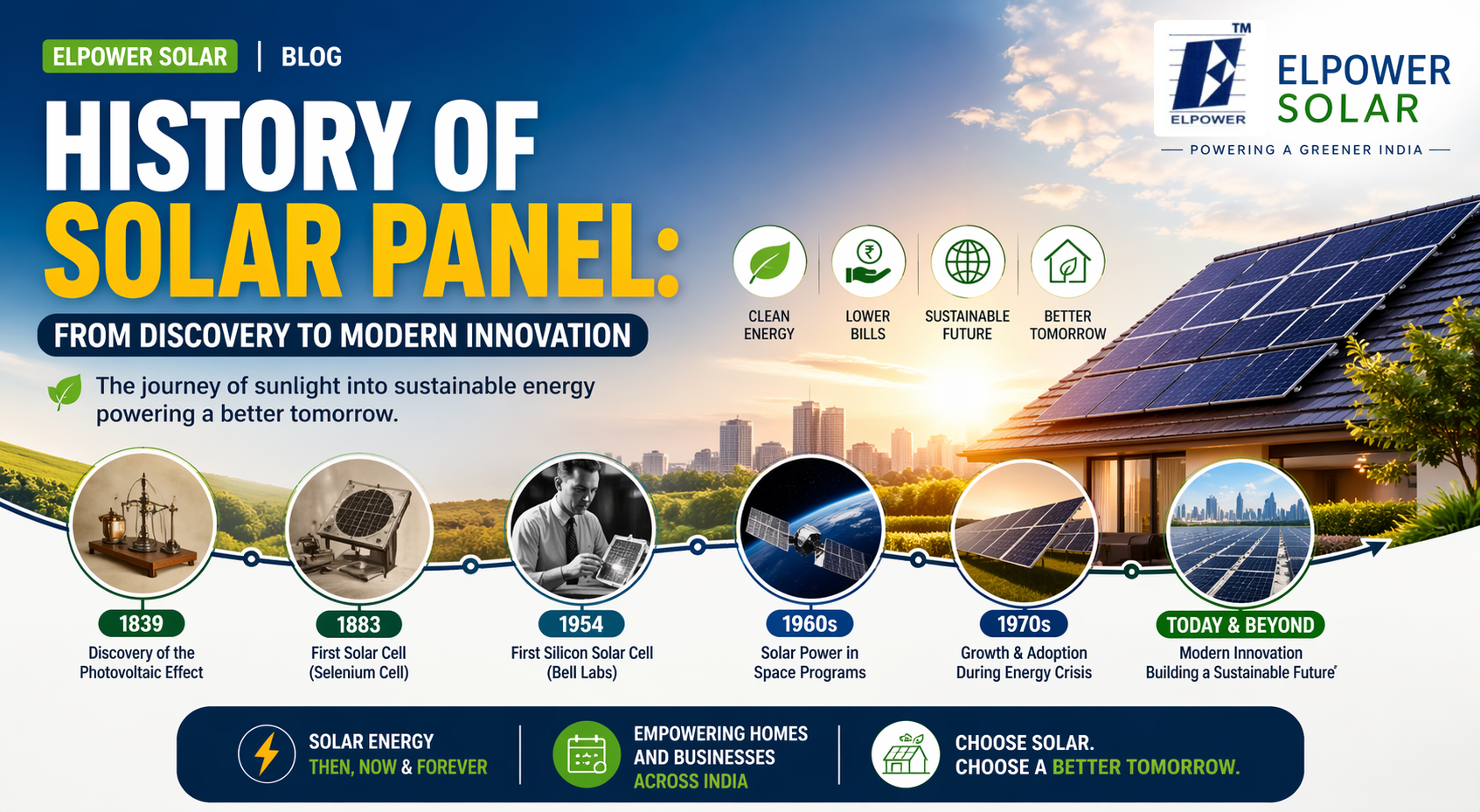
History of Solar Panel: From Discovery to Modern Innovation
Introduction
The History of Solar Panel is a fascinating journey of innovation, science, and sustainability. As the world shifts toward clean energy, solar power has become one of the most reliable and eco-friendly solutions. With rising electricity costs and increasing environmental concerns, the demand for solar energy is growing rapidly—especially in countries like India.
Understanding the evolution of solar energy helps us appreciate how far this technology has come—from simple scientific discoveries to advanced solar systems powering homes and industries today.
1. Early Discoveries in Solar Energy
The foundation of modern solar panels lies in the discovery of the photovoltaic effect in 1839 by French physicist Edmond Becquerel. He found that certain materials could produce electricity when exposed to sunlight—this became the basis of all solar technologies.
Key Milestones:
- 1839: Discovery of photovoltaic effect
- 1873: Discovery of photoconductivity in selenium
- 1883: First solar cell created using selenium by Charles Fritts
Although these early solar cells were inefficient (less than 1% efficiency), they proved that sunlight could be converted into electricity.
Why It Matters:
These early experiments laid the groundwork for the entire photovoltaic history, inspiring future scientists to improve solar efficiency and practicality.
2. Birth of Modern Solar Panels
The real breakthrough in solar panel development came in 1954 when scientists at Bell Labs developed the first practical silicon solar cell.
Key Highlights:
- Efficiency improved to about 6%
- First time solar energy became commercially viable
- Sparked global interest in renewable energy
Role of Space Programs
Solar technology gained major attention during the space race. Satellites needed reliable power sources, and solar panels became the perfect solution.
- Used in early satellites like Vanguard 1
- Proved solar energy could work in extreme conditions
- Accelerated research and funding
This phase marked a critical point in the solar technology timeline, transitioning solar power from experimental to practical use.
3. Growth and Commercialization
The 1970s energy crisis played a significant role in accelerating the evolution of solar energy. As oil prices surged, governments began investing heavily in alternative energy sources.
Major Developments:
- Increased funding for solar research
- Introduction of solar panels for homes
- Gradual reduction in manufacturing costs
Advancements in Technology:
- Improved efficiency of solar cells
- Development of polycrystalline and monocrystalline panels
- Better storage solutions
Why Solar Became Popular:
- Rising electricity costs
- Environmental awareness
- Government incentives
This era marked the beginning of solar energy entering mainstream markets, making it more accessible to the public.
4. Modern Solar Technology
Today, solar panels are more efficient, affordable, and widely available than ever before. Modern innovations have transformed solar into a powerful energy solution.
Key Features of Modern Solar Panels:
- High efficiency (20%+ in many cases)
- Smart monitoring systems
- Long lifespan (25+ years)
- Low maintenance
Technological Innovations:
- Bifacial panels that capture sunlight from both sides
- Thin-film solar technology for flexible applications
- Integration with smart home systems
Solar in India’s Energy Future
India is rapidly becoming a global leader in solar energy. With initiatives like rooftop solar schemes and renewable energy targets, solar power is playing a crucial role in the country’s development.
Benefits for Indian Consumers:
- Reduced electricity bills
- Government subsidies
- Energy independence
- Environment-friendly living
5. Future of Solar Energy
The future of solar energy is incredibly promising, with new technologies making solar smarter and more efficient.
Upcoming Innovations:
- AI-powered solar systems for better efficiency
- Advanced battery storage solutions
- Smart grids for energy distribution
- Solar integration with electric vehicles
Global and Indian Goals:
- Net-zero carbon emissions
- Expansion of renewable energy capacity
- Sustainable urban development
Solar energy is no longer just an alternative—it is becoming the primary source of power for a cleaner future.
Solar Technology Timeline (Quick Overview)
| Year | Milestone |
|---|---|
| 1839 | Discovery of photovoltaic effect |
| 1883 | First solar cell developed |
| 1954 | First silicon solar panel |
| 1970s | Solar gains popularity during energy crisis |
| 2000s | Commercial solar expansion |
| Present | Smart, high-efficiency solar systems |
Why Choose ELPOWER SOLAR?
As solar technology continues to evolve, choosing the right solar partner is crucial. ELPOWER SOLAR is a trusted name in India, providing reliable and affordable solar solutions for both residential and commercial needs.
What ELPOWER SOLAR Offers:
- Rooftop solar installation services
- Customized solar solutions for homes & businesses
- High-quality and durable solar panels
- Affordable pricing with maximum ROI
- End-to-end support from consultation to installation
Why Customers Trust ELPOWER SOLAR:
- Expertise in modern solar technologies
- Commitment to sustainability
- Strong customer support
- Focus on long-term energy savings
Make the Switch to Clean Energy Today
The journey of solar energy—from its early discovery to modern innovation—proves its reliability and importance in today’s world. Now is the perfect time to invest in solar power and reduce your dependence on traditional energy sources.
Contact ELPOWER SOLAR today:
- 📞 Call/WhatsApp: 8895470375
- 📧 Email: elpowerpvtltd@gmail.com
- 🌐 Website: www.elpowers.com
- 📸 Instagram: elpowersolar
- 👍 Facebook: Elpower Solar
FAQs (SEO Optimized)
1. What is the history of solar panel development?
The history of solar panels began in 1839 with the discovery of the photovoltaic effect. It evolved through early experiments, the invention of silicon solar cells in 1954, and modern technological advancements.
2. Who invented the first solar panel?
The first practical solar panel was developed by scientists at Bell Labs in 1954 using silicon technology.
3. How have solar panels improved over time?
Solar panels have become more efficient, affordable, and durable. Modern panels can achieve over 20% efficiency and last more than 25 years.