
Mandatory Solar Inverter Standards in India (2026): What It Means for Homeowners & Businesses
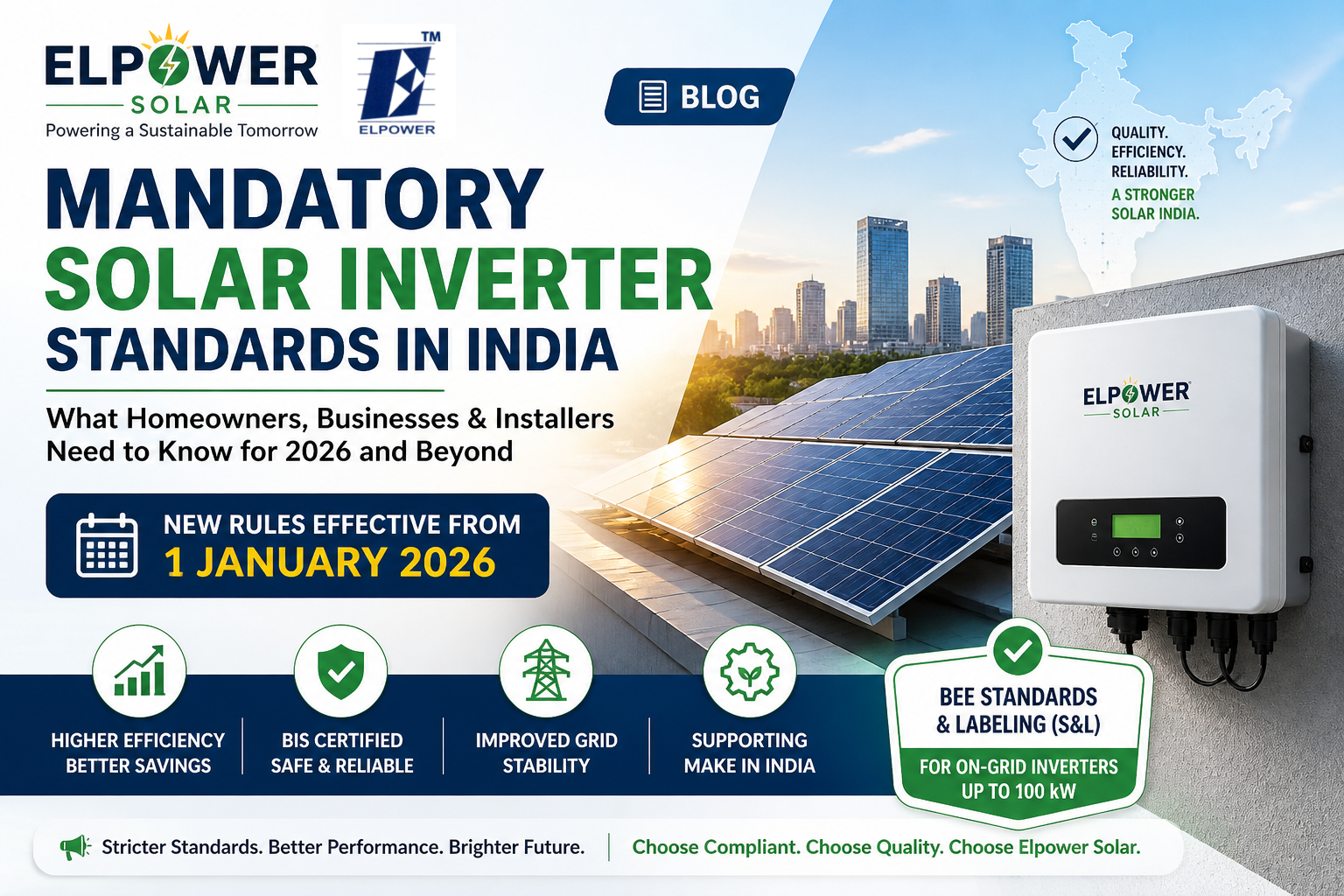
Mandatory Solar Inverter Standards in India (2026): What It Means for Homeowners & Businesses
Introduction: India’s Solar Boom Meets Quality Control
India is witnessing an unprecedented surge in solar energy adoption. From residential rooftops to large-scale commercial installations, solar power has become a cornerstone of the nation’s clean energy transition. With ambitious renewable energy targets and increasing awareness among consumers, the demand for efficient and reliable solar systems has never been higher. However, rapid growth has also brought challenges—especially around product quality, system performance, and long-term reliability.
To address these concerns, the government has introduced mandatory solar inverter standards India, a significant regulatory step aimed at ensuring quality and efficiency across grid-connected systems. Spearheaded by the Bureau of Energy Efficiency (BEE) in collaboration with the Ministry of Power, these new regulations will come into effect from January 1, 2026.
This move is expected to transform the solar landscape by eliminating substandard products, improving system performance, and boosting consumer confidence. Whether you are a homeowner, business owner, or solar installer, understanding these new rules is essential to making informed decisions in the evolving solar market.
What Are Grid-Connected Solar Inverters?
A grid-connected solar inverter is the heart of any on-grid solar system. It converts the direct current (DC) electricity generated by solar panels into alternating current (AC), which can be used to power homes and businesses or exported to the electricity grid.
In simple terms:
- Solar panels produce DC power
- The inverter converts it into usable AC power
- Excess energy is fed into the grid (net metering)
These inverters play a critical role in:
- Ensuring efficient energy conversion
- Maintaining system safety
- Synchronizing with grid voltage and frequency
Without a reliable inverter, even the best solar panels cannot deliver optimal performance. That’s why the new grid-connected solar inverter rules are focused heavily on efficiency and quality benchmarks.
Overview of the New Mandatory Standards
The government has introduced comprehensive regulations under the BEE Standards & Labeling (S&L) Program to ensure that all grid-connected solar inverters meet minimum performance criteria.
Key Highlights:
- Applicable to on-grid solar inverters up to 100 kW capacity
- Mandatory inclusion under BEE solar inverter efficiency standards
- Implementation timeline:
- 2026: Initial compliance phase begins
- 2027: Full enforcement across all installations
This means that from 2026 onward, only certified and compliant inverters can be manufactured, sold, or installed in India.
These on-grid solar inverter regulations India are designed to create a standardized, high-performance ecosystem for solar adoption across residential, commercial, and industrial sectors.
Minimum Efficiency Requirements (Crucial for ROI)
One of the most important aspects of the new regulation is the introduction of strict efficiency benchmarks.
Solar Inverter Efficiency Standards (India 2026)
| Inverter Capacity | Minimum Efficiency |
|---|---|
| < 1 kW | 92% |
| 1 – 3 kW | 93% |
| 3 – 5 kW | 95% |
| 5 – 10 kW | 96% |
| 10 – 20 kW | 97% |
| > 20 kW | 98% |
Why Efficiency Matters
Efficiency directly impacts how much solar energy is converted into usable electricity. Even a 1–2% difference can significantly affect long-term savings.
Benefits of higher efficiency:
- Increased energy output
- Faster return on investment (ROI)
- Lower electricity bills
- Better system performance over time
For example, a highly efficient inverter ensures that more solar energy is utilized instead of being lost during conversion. This makes solar inverter efficiency India 2026 a key factor for anyone planning a solar installation.
BIS Certification & Testing Requirements
In addition to efficiency benchmarks, the government has made BIS certification solar inverter India mandatory.
Key Requirements:
- Compliance with IS 16221-2:2015 standard
- Testing must be conducted in accredited laboratories
- Strict quality checks with zero tolerance for underperformance
This ensures that every inverter installed in India meets safety, durability, and performance standards. Non-compliant products will no longer be allowed in the market.
For consumers, this translates to:
- Higher reliability
- Reduced risk of system failure
- Better warranty assurance
Why the Government Introduced These Standards
The introduction of mandatory standards is not just about regulation—it’s about strengthening India’s solar ecosystem.
Key Objectives:
- Eliminate Low-Quality Imports: Remove substandard and inefficient inverters from the market.
- Improve Safety: Reduce risks of electrical hazards and failures.
- Enhance Grid Stability: Ensure smooth synchronization with the power grid.
- Support “Make in India”: Promote domestic manufacturing.
Additionally, the Ministry of New and Renewable Energy (MNRE) has reinforced this move through its Quality Control Order (2025), emphasizing standardized solar equipment nationwide.
Impact on Different Stakeholders
Homeowners
- Higher efficiency means more savings on electricity bills
- Improved system reliability
- Faster ROI on rooftop solar investments
Businesses
- Better long-term performance
- Reduced downtime and maintenance costs
- Greater energy predictability
Installers & EPC Companies
- Need to upgrade product selection
- Focus on certified equipment
- Opportunity to build customer trust
Manufacturers
- Increased compliance pressure
- Push for innovation
- Boost for domestic production
Overall, these grid-connected solar inverter rules will significantly raise industry standards.
Future of Solar Inverters in India
The future of solar inverters in India is moving toward smarter and more integrated systems.
Emerging Trends:
- Smart inverters with real-time monitoring
- Integration with mobile apps and IoT platforms
- Enhanced grid interaction
- AI-driven optimization
Government initiatives are also pushing toward achieving 500 GW of non-fossil fuel capacity, making advanced inverter technology essential.
Why Choose Elpower Solar?
As regulations become stricter, working with a trusted solar provider is essential. Elpower Solar offers future-ready solar solutions with full compliance.
- BIS-compliant, high-efficiency inverters
- Adherence to BEE standards
- Expert installation and design
- Strong presence in Odisha
- Commitment to quality and safety
Elpower Solar ensures complete compliance with on-grid solar inverter regulations India for all installations.
Conclusion: A New Era of Reliable Solar Energy
The introduction of mandatory solar inverter standards India marks a major step toward improving quality, efficiency, and safety in the solar sector.
Benefits include:
- Better ROI
- Improved lifespan
- Higher confidence in solar technology
As the industry evolves, adopting compliant systems is no longer optional—it’s essential.
☀️ Ready to Go Solar the Right Way?
Contact Elpower Solar today for future-ready, fully compliant solar solutions tailored to your needs.